Vision

To help transition Japan to a peace promoting post-carbon country while enjoying every step of the process.
僕のビジョンは、祖国日本で、平和文化を育みポストカーボン(Post-Carbon) 社会を促進してゆく事です。
化石燃料や原子力に頼らず、他国の資源を取らない、
自給自足な国へのトランジションを実現させてゆきたいです。

Showing posts with label 自然農 Natural Farming. Show all posts

Monday, February 6, 2017

【ARTICLE】Natural Farming in Japan: Akame-shizenoh Juku

This is an article I wrote about the natural farming movement in Japan and Akame natural farming school. The article was for a crowdsourced book called Sustainable (R)evolution (click to check out this amazing project!). I also wrote articles on the Bullocks Permaculture Homestead, the City Repair movement in Portland, the ecofarm movement in Thailand, and on chinampas.

For more on natural farming (besides the well-known Fukuoka, Masanobu), you can search Kawaguchi Yoshikazu and akame (the topic of this article), and I highly recommend checking out the book (free online) Miracle Apples.


*This is the closest to our final draft, and the pictures are different from the book


Kawaguchi, Yoshikazu in his garden


The traditional method of drying rice and hand-powered threshing


Yoshikazu in his rice-field cutting weeds with his kama


Akame natural farming school


Cutting the above-soil parts of the weeds in preparation for planting


Planting negi (green onion) in the garden


Broadcasting directly into the weeds


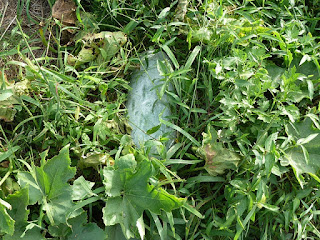
The harvest hidden amongst the weeds


Akame-Shizenoh Juku
by Kai Sawyer and Mai Kobayashi

A farming method that did not involve any pesticides or fertilizer use was first advocated by Japanese philosopher, holistic health practitioner, and spiritual leader Mokichi Okada. In 1950 he called his practice the "shizen noh hou" or the natural farming method. A decade later, plant pathology scientist and philosopher Masanobu Fukuoka also experimented with similar methods, but further extended natural farming methods to include no tilling and no weeding. In 1975, he published The One-Straw Revolution: An Introduction to Natural Farming. Fukuoka's impassioned advocacy of natural farming eventually made him a revolutionary figure in the global movement for sustainable agriculture. Passing away in 2008, Fukuoka did not live to see the revolution in consciousness he had hoped for, but the seeds of natural farming continue to thrive and evolve in Japan.

Today, a central hub for the natural farming movement is Akame-Shizenoh Juku (Akame-juku for short) , nestled near the border of Nara and Mie Prefecture. The site was originally an abandoned series of rice paddy and garden terraces surrounded by man-made forest. Seeing the need for a place where people could come to learn natural farming, Yoshikazu Kawaguchi, the respected practitioner and teacher of natural farming, reclaimed the terraces and started Akame-juku in 1991. The school is completely donation-based, each student paying what they can afford. Kawaguchi understood that most people attempting natural farming were at a major turning point in their lives and often had no money, whether they be conventional farmers trying to switch farming methods, white collar workers looking for a new way to live, or  students. He says that as a teacher, he wants to teach as many eager students as possible, and that he believes the quality of learning is richer when unobstructed by financial concerns.  Learning how to live life, which natural farming essential is, must be accessible to all people.

Yoshikazu also believes that freedom is essential for learning, so there are no obligatory group tasks, however, communal endeavors are a valuable opportunity to learn from one another.  Students are free to spend however much time they can afford in their rice paddies and gardens. Each new student is able to choose a plot among the fields and paddies that become available throughout the year enabling them to direclty put to practice what they learn. Every second weekend of every month (except January), Kawaguchi gathers all the staff members for a monthly gathering. Anybody can come to receive guidance by Kawaguchi and various staff members, cultivating their awareness and experiencing deep realizations about natural farming. The basic principles practiced at Akame-juku are, no tilling, no treating plants or insects as your enemies, and no using pesticides or fertilizers, including compost. Farming must be based on an understanding and respect for nature's dynamic balance that, if approached correctly, will work to nurture life as a whole.  These are guiding principles that are based on a holistic understanding of farming as a part of an ecological balance that we take part in cultivating. An example is Kawaguchi’s instruction for managing vigorous volunteer plants that are overwhelming seedlings: using a sickle as necessary, trim them at the base above their roots, so as not to disturb the soil structure.

The plants here are not treated as competitive weeds, but instead used as mulch and are not totally removed so as to leave food for insects. Food scraps from the harvest taken out of the fields may also be brought back to the fields. This is not fertilizer, but nutrients brought back as supplement simply to maintain the nutrient cycle. Students at Akame-juku experiment and learn how to nurture life through minimal interference in the natural cycle. Through this practice, they also nurture ecological balance, their own consciousness, and inner peace. 

As Akame-juku hosts over 250 students every year, several thousand people have worked on the land since the school opened. Today, dozens of natural farming schools inspired by Akame-juku can be found all over Japan. Kawaguchi says that his greatest joy is to see former students starting their own study-groups and learning centers around Japan.  

The path of natural farming is one of humility, deep observation, and constant flexibility. Kawaguchi says that he accepts that he cannot fully understand nature, but rather can only assist in nature’s cycles as best he can. Natural farmers realize the futility of imposing control over nature and the unsustainability of standard agriculture's attempts to artificially maximize yields and profits. Instead, through minimal interference in the natural cycle, natural farmers in Japan and elsewhere are showing the way to a healthy future for the earth and its inhabitants.


Tuesday, June 18, 2013

The Beauty of Pollination video 授粉の美しさ

A beautiful video on pollination.
A critical element for genetic diversity
and food production.
Thanks dad!

授粉を撮った自然の芸術
生物多様性に不可欠なプロセス
食糧生産にも。


Thursday, August 25, 2011

Natural Farming the Miracle Apple 奇跡の林檎

The two most well-known and revolutionary Japanese natural farmers alive today are probably Kazuichi Kawaguchi and Akinori Kimura. I've written a bit about Kazuichi in the past and hopefully I will write more soon, but this entry is about Akinori and his "Miracle Apples."

奇跡の林檎という本を読んだ事がありますか?
なければ是非読んでみてください。
とても感動的なお話で、
サステナビリティー革命のための大切なヒントが秘められていると思います。
不可能を可能にすること。

だれもが無理だと思う事に挑戦し、
どんどん実現させて生きましょう。
【不可能】とは想像力の欠如なのです。
みんなでやれば木村さんの様に
孤独に苦しむ必要もありません。

木村さんの努力と自然に感謝!

因にオノ・ヨーコさんが感動のあまり、
英語の翻訳を依頼して、
ネットに公開しています。
リンクは記事の一番下です。


Above is the bestseller book that introduced me to this amazing man.
Later, I watched a TV show that made him even more famous
and reignited the consciousness of the Japanese masses about chemical-free foods.
It is "common sense" that you can't grow fruits without chemicals in mainstream Japan.
Especially apples.
That's why its called the miracle apple.

I remember doing a presentation about natural farming at the PDC this year, and Doug Bullock having a hard time believing the apple story. Not an unusual response as the growing season in Japan is rainy and hot, which is an ideal environment for pests like bugs and fungi to flourish. From the book,
Research in Japan suggests that if pesticides are not used, apple yields decline by at least 90 per cent due to damage caused by pests....
[Apple trees are] subject to major damage which results in a reduction in yield to 10 per cent or less of annual average yield cannot produce blossom the following year. Without blossom, there will of course be no fruit. In other words, if pesticides are not used for two continuous years, the apple crop will almost certainly drop to zero. Unless pesticides are used, this situation cannot be turned around....
Attacks by huge swarms of destructive insects, diseases spreading like wildfire … the history of apple growing is also one of the futile battles against insects and disease. One ray of light illuminating the battlefield was pesticides. Had pesticides not been developed, apple growing would have disappeared in Aomori Prefecture ages ago. The idea of growing apples without pesticides is nothing but nonsense. All apple farmers are convinced of this. The question is, why was Kimura [not] taken in by it?
Whether it be Akinori or Masanobu Fukuoka, what strikes me is their relentless curiosity and exceptional observation skills. Deep observation seems to be the key element for succeeding in natural farming....and in any of life's tasks for that matter. Seeing reality for what it is.

Pests, diseases, and weeds are indicators of ecological balance and plant health. Instead of seeing these as "enemies" to fight against, we can appreciate them as information about our environment, and receive them as a challenging opportunity to look deeply into root causes. Same with people and their actions. If we really understand the unmet needs of ourselves and others, we can come up with better strategies to meet those needs.

A common experience that these natural farming pioneers went through is intense hardship. To be a farmer and have no harvest is devastating in itself. But to be ostracized by your community and at times threatened, in addition to shaming your family because they were attempting something new must have been excruciating.

Anyways, this book is very touching and entertaining, and the two Japanese women I lent it to cried while reading it. Very touching story. Its one man's quest to attempt the impossible, and is filled with interesting stories of Japanese culture, and even aliens!
Unfortunately, it's in Japanese.......

But, after reading the book on a flight from Japan to NYC, Yoko Ono was deeply moved. She had it translated and posted the text on the web for all to enjoy! Many thanks to Yoko, the original author, and of course Akinori, who almost commit suicide after six years of failing in his attempts and suffering immensely along with his family.
If there's a will, there's a way.

Here is the book in full
http://imaginepeace.com/miracleapples/

Sunday, July 31, 2011

Trip to Japan 2010: exploring Japanese permaculture Part 3


YAMANASHI: hippies, artists, and natural farmers
山梨県 おおえまさのりと若子さん

I visited Masanori and Wakako Oe (Oes) who my wonderful friend Andy had persistently encouraged me to meet over the last two years. I knew very little about the Oes, but I trust Andy's recommendations. The Japanese I met through his recommendations in the past have been very impressive people, who shared my vision and values. (click here for that story A Different Kind of Luxury)

The Oes are very grounded old school Japanese hippies living in an alternative culture hotspot full of artists and farmers. They are impressive elders from whom I hope to learn more from in the near future. Andy writes poetically about the Oes so I invite you to at least read the online article to learn more about them. As a teaser here are some interesting highlights, Masanori Oe survived a B-29 machine gun attack as a child, translated The Tibetan Book of the Dead into Japanese, met Timothy Leary and Richard Alpert (aka Ram Daas) when he moved to New York to study film, and was one of the main organisers for the Festival of Life (8/8/88), which has numerous parallels to the original Woodstock Festival.

Our life connections: During the 70s he started the "Hobbit Village" in Nishi Ogikubo (Tokyo), a unique venue with one of the first organic vegetable markets, a restaurant, bookstore, and a free school where my parents attended lamaze lessons in the months before my birth. Coincidence?

Andy's book A Different Kind of Luxury is a great resource to learn more about the Oes philosophy and life, in addition to other exceptional Japanese who live elegantly.

You can read more about the Oes on Andy's blog too

http://adifferentkindofluxury.blogspot.com/


and here are articles on the internet Andy wrote on Masanori and Wakako

http://theopening.org/luxury/oe.html

http://theopening.org/luxury/wakako.html


Wakako Oe, with whom my interaction was unfortunately brief, is not only a very experienced farmer but also an artist in all sorts of media including traditional wooden puppets. The Oes' house is decorated with natural art and artful pieces of nature, and their lives are truly fascinating works of art.

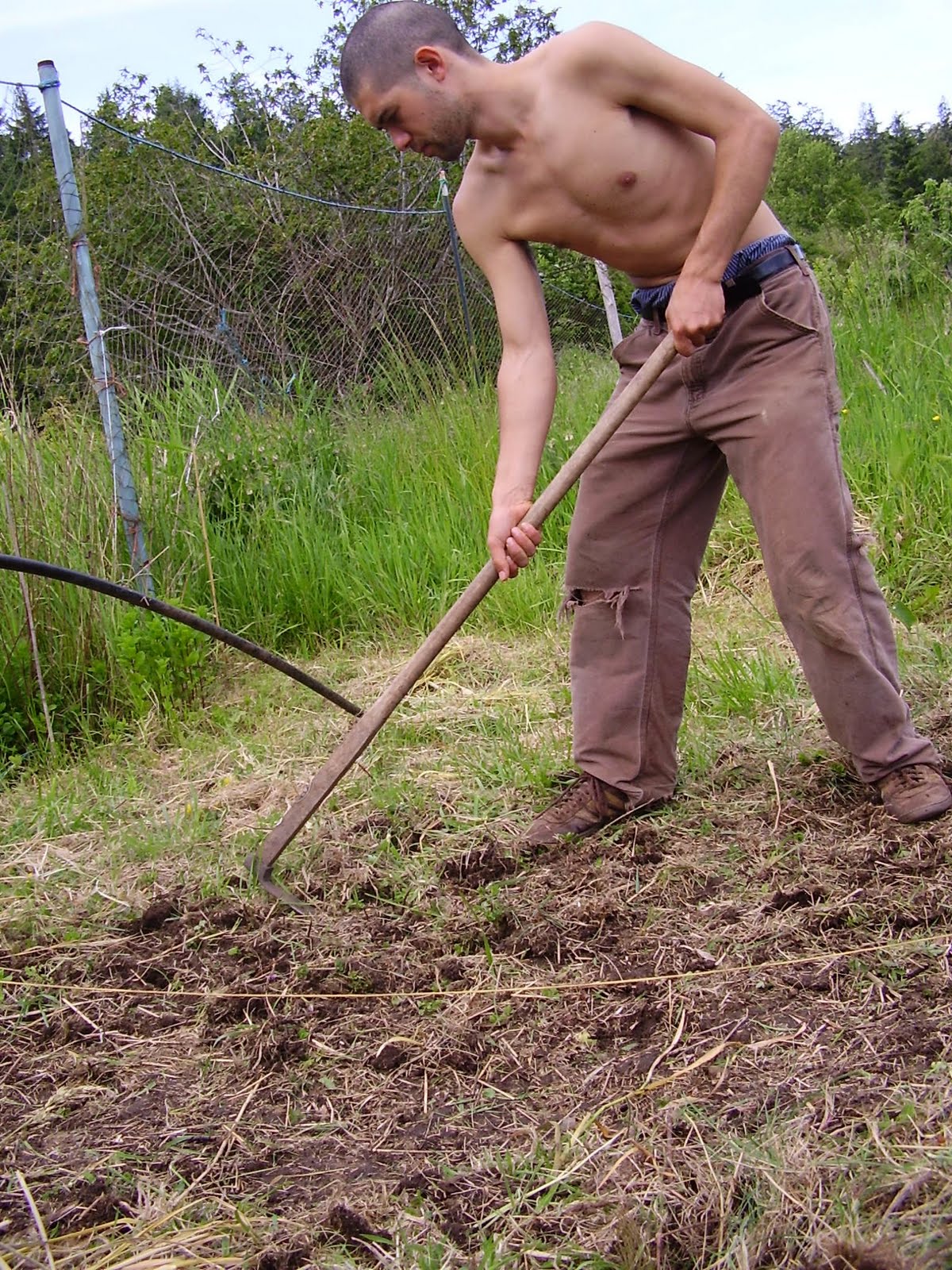
The weekend I visited them coincided with the quarterly Yatsugatake Natural Farming Gathering. Above, the instructor, Mr. Mitsui, is using the kama to cut the soil in order to plant a piece of potato. I was told that the kama is the only tool you need in natural farming, sort of like the machete in parts of Latin America.

Natural farming schools can be found all over Japan now. Chinese medicine practitioner and natural farmer Yoshikazu Kawaguchi has been central to the evolution of the natural farming movement and the increase in localised schools hosted by motivated natural farmers.

The Oes also host students to study natural farming, both rice paddy and gardening, on their land. Masanori started organic farming in the 90s, and after an inspiring encounter with Yoshikazu he transitioned to natural farming. He told me that they bought land recently because it takes years to develop the soil for natural farming and as a renter you might be kicked off the land by the time you finally develop a balanced ecology. I'm still trying to appreciate the fundamental differences between organic farming that I'm familiar with, and natural farming which I'm just starting to understand.
Natural farming is deep and really challenging!

I find it extremely exciting to meet people like the Oes, and it fuels my motivation to leave the alternative West Coast scene in the US that I thrive in, and prepare to return and settle in Japan. Teachers and community makes all the difference, and conscious farmers have been fundamental influences in my life.


BONUS
OSAKA: Quick stop at school-days home
大阪 自然と母のアーバン・フォレスト・ガーデン

My family home in Osaka.
Its a typical prefab modern house that looks like its made of plastic.
The house is quite small by American standards, but a good size for Japanese.
Very little front yard space that is dedicated to bicycle parking, laundry hanging, and a mini garden.

Above is the garden in all its entirety.
A mini food forest co-created by my mom and nature.
The beds are about two feet wide and about three yards long,
with a mix of fill and store bought soil.

The cast are dwarf cherry, raspberry, goji berry (volunteer), rosemary, climbing rose, ferns (adopted), and a bunch of perennial volunteers including the tree to the left, probably a keyaki (Zelkova serrata). I added an apple tree this year, and we will probably remove the keyaki as it is entangled in the power lines and dropping unsolicited organic matter on our neighbors' concrete. The challenge of urban food forests in extra tiny spaces.

Big trees are uncommon in Japanese cities in comparison to the US, and are more likely to be a source of conflict with neighbors. An American PhD student at University of Tokyo studying urban forests pointed out that Japanese cities have hardly any forests. A key factor might be density. Japanese cities are super dense!

Hey thats a permaculture principle: Small Intensive Systems.

An urban community garden sandwiched in between apartment complexes.
Despite the density and limited community space, I was able to spot numerous community gardens in Osaka and Tokyo.
Yeah!!!

The average age of those tending the community gardens appeared quite high.
Probably only people over 60, and most likely a great source of stories and knowledge. What an awesome resource.

I included my stop in Osaka in this entry because I want to acknowledge the potential that exists in urban areas, and stimulate my desire to engage with that world that I have yet to appreciate.

Next will be the final entry of this series,
and perhaps the most exciting potential project that I've come across.

Thursday, July 8, 2010

Shizeno update 6/28 maintenance

自然農アップデート
この日始めて雑草を鎌で刈りました。
I usually check on my organic garden beds every day or two, but my shizeno (natural farming) beds are a bit further out of my normal area of life that I see it once every 3~5 days. At Akamejuku in Mie prefecture, where Kawaguchi teaches natural farming and lends land to anybody for practice, I heard some people will come from far away (like Tokyo) and only be able to check their gardens once a month. I think that is part of the beauty and lure of natural farming, the fact that you don't need to baby your plants. You grow strong plants that can retrieve necessary nutrients, find enough water, and not become overwhelmed by vigorous neighbors. Anyways, the experiment is going well and I think I'm learning a lot from this experience. You just got to do it to have a better understanding.....like anything else.

The plants are definitely smaller than my organic garden beds, and a few past away. Kale, shiso, corn, chard, winter squash seem to be doing well, but the onions are struggling a bit.

So, these are my pictures when I finally decided to help the transplants out and kama the volunteers, especially comfrey. Here are a few before and after pics from both the prepared beds and the straight-into-weed-jungle area. One of the challenges at this stage is finding your plants and cutting around them. Comfrey is definitely tricky as it is vigorous and they send out large sun blocking leaves persistently.

before

after

These are closeups of the areas I transplanted into weeds on the perimeter of the ditch weed barrier.

Lets play an observation game, so scroll slowly and try to find the veggies in the before screen.

Can you spy the bush beans, red russian kale, and shiso?
豆、ケール、と紫蘇はどこに行ってしまったのでしょうか?

before

after

There are a few bunches of corn sprouts.
Can you find any of them?
このジャングルの中にいくつかトウモロコシの集団が植えられています。

before

after

This is shirahime hatsuka (white princess 20 day) daikon from Kitazawa seed company. They are tiny daikon radishes that can be harvested in 20 days! Great texture and flavor. Pretty happy about them.
白姫二十日大根の写真です。あまり辛くなくシャリシャリした可愛い大根です。植えて二十日後に収穫をする事ができます。アメリカで新鮮な大根が食べれて嬉しいです。


I'll get back on more translating but I will probably be too busy with the Permaculture Design Course and time with family for the next month. lo siento.

Tuesday, June 15, 2010

Shizeno update 6/3 & Excess Fertility

Update from June 3rd.
6月3日の自然農アップデート。

SHAPING and TAPPING
After digging the paths (also functions as a ditch for water and weed barrier) and using the material to raise the beds, I tapped down the soil with a shovel and my hand. Etsuko (author of the book I am using to guide me CLICK) says to tap down with a shovel or a board with a handle to shape the bed. In all honesty, I'm not exactly sure why this is necessary and it seemed to go against my training in Biointensive gardening where preparing a fluffy bed was essential in order for the plant roots to penetrate the soil with ease and for increasing drainage. Perhaps it was unnecessary. It does help to create an even surface and the soil will probably dry slower which is important since less watering is another element of shizeno (natural farming) and stronger flavored veggies.

PLANTING
Finally, it came time to plant. I probably should have planted earlier in the season but it was quite cold in May and I was also busy preparing my Biointensive garden beds which will be relied on for our food during the year.


With my hori hori, I opened small pockets and wedged left over transplants in. The bed on the right has an assortment of onions. Tokyo long green onion, red bulbing onions, and maybe some other ones. The middle bed has bush beans, cabbage, chard, kale, spinach, etc. The bed on the left is a daikon raddish bed from seed. I also planted corn and amaranth from seed on the South end (toward the grass), buttercup squash transplants, sweet pepper, and an assortments of herbs here and there.

I love diverse non-production oriented beds! Woohoo.
I will be a happy starving gardener :)
My main purpose for having a variety is to see what works in this climate with my shizeno beds.

In addition to this experiment, I decided to plant some starts straight into the weeds outside of the prepared area. Maybe to appease the radical purist in me. I'm always pondering about what "natural" means and what kind of gardening inspires me the most.

Here maybe you can see the kale, bush bean, and shiso transplant.

I should have mulched it right away, maybe even before transplanting but too much going on. Recently, I mulched it with some of the tall grass I cut off this area, but some of the interns had used straw as mulch and their garden beds (mostly brassicas) got wiped out from slugs and snails. I also started late so much of the grass had seed heads, so I opted to use grass clippings after mowing the paths of the far far field (where we have the potato and squash plantings). The purist inside of me was not excited about it, but the majority of me decided this was the practical thing to do considering all the factors I was working with.

Eiyoukatou 栄養過当 (Excess Fertility)
No fertilizing is an essential element of natural farming, check out Fukuoka's book to learn more about why. Kawaguchi and Etsuko do mention that you might add rice bran or sake lees if your soil is particularly poor. Etsuko suggest doing this 2 months before Spring planting. Of course, this makes sense is you or maybe your neighbor produces these by-products. In the US you might use wheat bran if you live in an area of wheat production. One of the main ideas in shizeno is to not import material. Keeping it local.

One of the most striking things I heard from natural farmer Kawaguchi was about eiyoukato. He mentioned that a few times when we visited his rice paddies, garden, and his home. What surprised me in his garden was that he had corn growing in one bed and in the next bed he had beans growing. In organic farming circles growing corn and beans together is a common practice. The three sisters is often mentioned: corn, beans, and squash that North American indigenous peoples planted together (or 4 if you also throw in amaranth). The beans fix nitrogen which the corn feeds heavily on.

Anyways, I asked Kawaguchi why he didn't plant them together and he mentioned eiyoukato. He explained that the corn bed didn't need extra nitrogen from the beans. The corn was healthy just as it was and the soil was in balance. The main point is fertilizing, even organic methods, is unnecessary in most cases (unless your goal is abundance of production which is often the case). Also, when you fertilize, weeds also have access to that abundance of nutrients. It is an invitation for them to grow strong. Also, plants grow faster with access to more nutrients, sometimes too fast. Excessive growth can lead to big unhealthy plants, like people who overeat fats and sugars. Those plants will attract various pest and diseases.

Coming back to my shizeno garden beds, I did not add anything EXCEPT the grass clippings from the paths as mulch that I mentioned earlier. This will probably add some amount of nitrogen, but I also did remove the weeds that were growing on the beds initially. What I will do next time though, is use the weeds I actually cut from the beds and lay them on as mulch.

One final note, the area I'm working in looks like nice rich soil with good drainage. That makes things much easier, and I am not sure what I would do in less optimal conditions.

Now for a break!
Then I'm hoping to write a little about my struggles with Abundance and Balance/just enough.

Sunday, June 6, 2010

Natural Farming Experiment 5/24

Update on my natural farming experiment (from May 24th)
In Etsuko's book (see previous entry), she suggests digging trenches around garden beds (generally 90~120cm for most veggies) and using that soil to make raised beds for better drainage. This of course depends on the climate, water, and soil situation specific to your site (this is true for all the suggestions from her book and other gardening methods). The beds should be arranged north to south rather than east to west to allow for equal sun distribution on the plants. In heavy clay sites where water may not drain fast enough, you might want to design in a way to release water from the ditch/paths.

First, cut the weeds at soil level with a kama (Japanese hand sickle), or you can go the all-American route and use a weed-whacker. I used a kama because it made more sense to me and that is what Kawaguchi uses. Then lightly shave the top of the soil to remove the weed seed bank and running weeds. I spent a lot of time thinking about what "no weeding" in shizeno and how this act of shaving fits in. But, like Kawaguchi said, the goal of natural farming is not just to be "natural" but to cultivate food too. I also have a desire to "succeed" in this experiment for various reasons, and have some harvest. Anyways, to each his/her own, and I decided to follow her advice as I know it will make things easier for me later in the season.
I used a kuwa and shaved off the top of the future garden beds.
Then I trenched around the the perimeter. The trench was a way to raise the beds as this area is sandy loam soil near a pond, so it gets quite wet. It also acts as a barrier to keep quack grass (a vigorous running weed) from overwhelming the garden beds.

I also delineated the garden beds with (bamboo) sticks and string, which is something I learned from a professor of agroecology, Steve Gleissman, who taught a Biointensive gardening internship at UCSC. Etsuko also suggested doing this. I find it aesthetically pleasing and it probably legitimates "strange" or "hippie" gardening to the mainstream audience.

More stuff to come....

Natural Farming book 2


自然農ガーデニングのガイドとして使っている本です。とても分かりやすく説明されています。でも、日本とここの風土は違うので、自分なりに工夫をするつもりです。特に夏が乾燥していて冬に雨が降るのは日本のほとんどの所との大きな違いだと思います。雑草の種類は勿論違うし、六月になっても寒い事も考慮しなければいけません。自分の中では今年が実験/研修期間で、来年から本番という様に考えています。この本は、イラスト満載で耕作を放棄した荒地を田畑に拓く方法から収穫・保存法まで具体的に説明してあります。お米、野菜、果樹全部をカバーされています。お勧めの本です。

Update on the shizeno (natural farming) experiment. The book above is what I am reading for specific advice on natural farming inspired by Kawaguchi's practice. The title is "Shizeno (natural farming)・a guide to cultivation" by Etsuko Kagamiyama. On Amazon her bio reads, "Born in 1955 in Miyazaki city. Then moves to Okayama after marriage. She encountered shizeno and Mr. Kawaguchi in 1992. Then begins to learn Chinese medicine [one of Kawaguchi's main practices, if I remember correctly]. This book was written after 15 years of shizeno experience. She lives a farming life with her husband and two daughters.

This would be an awesome book to translate for English speakers interested in shizeno. I might work on it when I have time, but I have to motivate myself since its more appealing to hang out in nature and garden myself. There are over 1000 illustrations and really simple and thorough directions about everything. There are explanations on starting a garden on an uncultivated site, dike building, cultivating grains, vegetables, and fruit trees. From planting to harvesting to storage. In the back of the book, there is an short exploration on what it means to live, descriptions and uses of various Japanese tools, a short natural farming dictionary, and advice on how to address bugs, birds, wild boars, rabbits, and raccoons. There is also two pieces by Mr. Kawaguchi, the editorial supervisor of the book. Pretty awesome resource to have, and considering that its in its 3rd printing since when it was published in October 2007, shizeno must be catching on again.

Sunday, May 30, 2010

Thoughts on natural farming/gardening 1

WHAT IS NATURAL FARMING? 自然農とは。。。
It depends (the answer to most questions here at the Bullocks).

A simple summary of what I understand shizen no (shizen-nature/natural and no-farming/gardening) is growing food without tilling, fertilizing, or weeding. Those are the 3 elements that both Fukuoka (One Straw Revolution) and Kawaguchi (the one I met) use as the foundation of their gardening method.

But to reduce shizen no to only the above would be misleading and disrespectful. There is a deep spiritual dimension to our relationship to the web of life, and shizenno is an intentional relationship with nature, to grow food in harmony with all life. It is an art, a spiritual practice, and a path that will help us look deeper into how everything is connected. Similar to permaculture, its not another farming method or style, it is not just about growing food, it is a way of life. Well, at least that is how I receive it. I'll share more as I learn on my first adventure actually doing it. My intention is to share in a nourishing way without becoming dogmatic, which is a common criticism about Fukuoka. And please let me know how I can support your interest in shizen no.

Kawaguchi, who has been doing shizen no since the 70s, says "growing food in a way where we do not till, we do not fertilize, we do not spray pesticides, and we do not treat weeds and bugs as our enemy." His main principles are, "no tilling, no importing materials, and no exporting materials." Respecting all life by not straining our environment.

This is an invitation to try it out with me and enjoy a new way of growing food, a new understanding of life. There may not be any epiphanies, much "production", and you might struggle with the pureness of your experiment, but until you do it natural farming will only be an idea.

The picture on the top is the site of my experiment before any of my interventions. Looks quite lush with volunteers. The bottom is after I cut all the grass with the kama, Kawaguchi's tool of choice. I also staked it with bamboo to help envision the dimension of the garden beds.

Friday, May 14, 2010

Translating Natural Farming (Book 1 Prologue)

去年の夏、自然農を育んでいる川口さんから頂いた本です。彼は最高です。この本を選んだ理由は、日本中にいる自然農を実践者達のお話ときれいな写真が載っていて、アメリカでも自然農の種を植えるのにちょうど良いと思ったからです。簡単に翻訳をしてます。僕が自然農テーマで始めて読んだ本は、福岡正信さんの"The Natural Way of Farming: The Theory and Practice of Green Philosophy"です。そして、この本が第二番目。今度本屋さんで見てみてください。きれいな本です。

There are 2 natural farming books I brought from Japan. One of them is the book to the left titled, "People who live natural farming" that a photo journalist published. This was full of pictures and I was looking at it when I went to Kawaguchi's house. I only had a 5000yen bill and he told me "just take it", and gifted me this book after spending half a day talking to me. He is someone I definitely hope to learn more from, very grounded, humble, and light-hearted.

This book basically holds the stories of various people who were inspired by Kawaguchi and are practicing natural farming all over Japan. Each story is accompanied by a picture of their gardens, full of weeds and garden plants or rice. Beautiful!

I'm hoping to contact the author soon for some of the pictures, but for now I will informally share some of my translations. I hope this will help people explore post-Fukuoka natural farming. As an aside, from what I understand Fukuoka was not the only person practicing and promoting natural farming, nor was he the first. But he did have a huge influence on many farmers in Japan and the world, including Kawaguchi. So, I think of our present time as the post-Fukuoka natural farming era....something like that.

Here is the Prologue (first draft of translation):

"Near the roots of the rice there are living insects. Weeds are growing. There are small creatures living in the nakigara layer. Microorganisms are flourishing. This is also where humans live. We are able to live only where other life thrives."

The "natural farming" Kawaguchi Yoshikazu practices in Nara province Sakurai city, is a farming method where you plant what is appropriate for that environment, and you intervene only when necessary in the cultivation of your crop. Recently, there have been an increasing number of people from Hakkaido to Okinawa Japan who practice Kawaguchi's method of rice and vegetable farming. His guidelines are, "no till, no use of fertilizers or pesticides, and not to treat weeds or bugs as your enemy." Just like a tree in the forest naturally grows tall, and the way edible forest plants sprout every year, rice and vegetables are grown in line with the natural order.

Nature will flourish in abundance if people do not excessively interfere. By cutting the weeds above the ground and leaving the roots in tact, then laying the tops on the ground, the soil is enriched as the weeds compost and become accessible nutrients. Wild plants will grow anywhere if the conditions are right. I am impressed by the life force of a weed growing out of a crack in the concrete of the city. If you consider vegetables to be a variety of weeds, as long as the conditions are right, it will grow. On the other hand, even wild plants will not grow on land with bad conditions.

The first time I heard of Kawaguchi was in a documentary film "Natural farming -The World of Kawaguchi Yoshikazu - Records of 1995." (Gendai Group productions) Depending on the listener, Kawaguchi's words may sound religious, and his appearance resembles that of a spiritual leader or philosopher.

Eventually, I was able to meet Kawaguchi at a farm study group at the "School of Kenji" in Tokyo. Unlike the image in books and in films, he seemed like an ordinary old farmer in any neighborhood, making jokes here and there to get everyone to laugh.

Of course, when Kawaguchi began natural farming in his neighborhood, the farmers around him complained. Weeds would spread seeds into their farms and there would be major outbreaks of pests, so he needs to weed. That was their attitude. Kawaguchi would not argue back and in his mild rural Nara accent respond, "I apologize. Let me think about that." But as time passes, it becomes apparent that even if there are weeds growing in his rice paddies and gardens, it does not adversely affect the surrounding gardens.

When I heard this story, I knew this man was the real deal. It is difficult for people to accept different perspectives. If we argue, we may hurt the other person. Without dismissing these farmers, Kawaguchi demonstrates through his actions. Kawaguchi's character most likely has a lot to do with the increase in people practicing natural farming all over Japan."

Natural Farming Experiment begins!

I'm slowly moving into my Natural Farming experiment as I finish my allocated main gardens which I am doing more or less the Biointensive garden method I learned at the University of California Santa Cruz Program in Agroecology and Community (PICA), Center for Agroecology and Sustainable Food Systems (CASFS), and the Homeless Garden Project. I've gotten better at it over the years but it just seems like a lot of work and something about it seems "unnatural" to me. Especially weeding. I really don't like weeding, and I think the weeds don't like it too. Also, with the CASFS organic garden apprenticeship, the focus seems to be in production and surviving/thriving in our current economic system as a small-scale organic farmer. In a world where our economic system doesn't fully respect and appreciate farmers and our environment, it seems like an unnecessarily hard path to take. Maybe things are getting better slowly now. I also don't want to mix growing food with money. Growing food and taking care of the earth is a spiritual practice, a necessity for us to survive and live. But, as many will respond, that's too idealistic. We will see about that, after all don't ideals help us to transform and evolve?

NATURAL FARMING
I heard about natural farming from one of the gardeners at UC Santa Cruz. He talked about the book "One Straw Revolution" and mildly got me excited. But, I never read that book and instead read "The Natural Way of Farming: Theory and Practice of Green Philosophy" while farming in Costa Rica. That made me want to learn more about the topic and actually see it in practice. In permaculture circles natural farming comes up here and there and it is always associated with Masanobu Fukuoka. And although I met people who have met him (at UCSC and elsewhere), I could never find anybody practicing his method.

Then last year when I went back to Japan I started to hear about a natural farmer Yoshikazu Kawaguchi. In Japan, when natural farming is mentioned, Kawaguchi is the person people talk about. A friend invited me to meet and interview him at his home and I was able to explore his beautiful weed filled rice paddies and gardens. I asked him about Fukuoka and shared a bit about permaculture and food forests. I might write more about that later, but for now I'd rather share some translations about him and the natural farming he teaches. Followed by updates on my own natural farming experiment here in Washington.

A little on Yoshikazu Kawaguchi. He was born in 1939 in Nara prefecture. He suffered mentally and physically from chemical (conventional) agriculture and begins to explore natural farming in the mid-70s. He now advises and teaches natural farming all over Japan. He's written a few books such as (roughly translated) "Standing in a strange garden" (1990), "Natural farming-the world of Yoshikazu Kawaguchi" (2000), "The path of natural farming" (2005), and a couple of others. I don't think any of them have been translated.