Vision

To help transition Japan to a peace promoting post-carbon country while enjoying every step of the process.
僕のビジョンは、祖国日本で、平和文化を育みポストカーボン(Post-Carbon) 社会を促進してゆく事です。
化石燃料や原子力に頼らず、他国の資源を取らない、
自給自足な国へのトランジションを実現させてゆきたいです。

Showing posts with label Permaculture in Action. Show all posts

Tuesday, August 1, 2017

Peace and Permaculture Dojo update part 3: Earthen Wall workshop

Update on the Peace and Permaculture Dojo project Part 3

日本語は【TUP道場】土壁塗りワークショップのレポート(写真と動画)


This is the third piece on the Dojo project (see below for context and previous articles)

Peace and Permaculture Dojo in Japan part 1

Peace and Permaculture Dojo Tour and Culture (April 2017)


We’ve been working on designing and redesigning (its always dynamic) the human ecology of the Dojo project and Tokyo Urban Permaculture, so the physical progress has been limited as planned. The social permaculture aspect of this project is really quite fascinating, and that is my particular interest, but I won’t get into that right now.

We are now working on the earthen walls tsuchikabe. We’re also trying to figure out where to put showers and the grey water system, and I’m super slowly working on another compost toilet.

Below is a bilingual video of our first tsuchikabe workshop facilitated by Kyle who is super awesome and thorough. My explanation on the other hand is not perfect/accurate, but I think you’ll get the gist of it. My aim is to get 60% of what I say right!


For more pictures of the workshop and process see Tokyo Urban Permaculture


Also, below that is a wonderful write up by one of the participants Max Durayappah-Harrison, who is a PhD student in anthropology studying about Japanese agriculture. Copied from Isumi Life Style Laboratory

*****

Since late last year there has been much activity taking place in one particular corner of Chōjamachi, Isumi.

Renovations were begun on a kominka (a traditional-style, wooden-built Japanese home), with the plan to eventually make it the center of a retreat at which peace activists can explore permaculture and other practices aimed at achieving positive change in the world.
One of the core objectives of the project is the building of community through working with and for the benefit of others.

The process of repairing and reconstructing the Permaculture and Peace Dōjo (as the kominka is known) therefore incorporates events at which members of the general public are able to participate in the renovation, learn about the project and meet others.

In early May, I was lucky enough to be a part of the earthen plaster workshop held at the Dōjo. In this post, I’d like to explain just a little about what we got up to.

The day began at 10am under brilliant sunshine with participants making their way down the tree-lined path that leads to the secluded Dōjo, entering the building and seating themselves on the newly-laid wooden floor that provides an inviting meeting and greeting place.

The coordinators of the Permaculture and Peace Dōjo project, Kai and Nao, had invited Kyle Holzhueter, a ‘straw bale builder’ and earthen plasterer, to lead the day’s activities.

Kyle began things with a short lecture on the history and intricacies of plastering in Japan. This included an account of how many of the motivations for particular design choices in Japanese building are founded in the nation’s geology (the prevalence of earthquakes necessitating ease of repair, for example) and culture.

He also introduced us to some of the properties of the material that make it practical and efficient as a resource in construction. This was brought home to me particularly clearly when he revealed that the plaster we would be using had as a primary constituent the decades-old plaster that had been stripped from the very walls that surrounded us.


Kyle, delivering his lecture

Once the mini-lecture was concluded we then set to work on the various tasks necessary to prepare for the application of earthenware plaster. These included:

•Removing loose and damaged plaster from the walls. Dusty work!
•Breaking down the old plaster and mixing it with fresh soil sourced from nearby.
•Adding water and straw to the mixture in order to bring it to the correct consistency that would allow it to bind when applied to the wall.

While all of these tasks were in themselves interesting, perhaps the most fun was had in mixing together the various ingredients of the plaster.

In order to do this on a large scale, a tarp was laid out and four walls created so that we could step inside and stamp, walk and dance it smooth.

And it is no exaggeration to say that the plaster was danced smooth, as there was an impromptu Bon Odori performance that took place, complete with music!


Breaking down soil and recycled plaster for the mix

 
The mixing station/stage (sans dancers)

It was around midday when we all broke for lunch. As is normally the case at events held at the dōjo, in order to encourage sharing and foster a sense of comradery everyone brought with them one item of food to distribute amongst the whole group – potluck style.

This resulted in a great array of foodstuffs, many of which were handmade by those that brought them. From organic onigiri to homemade bread, and pickled vegetables to fruit salad, it was a veritable feast!

Lunch also gave everyone the opportunity to chat and get to know each other a little better, as well as grill Kyle further on the art of earthen plastering. I wouldn’t say I was uneager to get back to work but it was certainly difficult to pull myself up and away from the delicious food and banter.


Healthy food and hungry workers

Once the afternoon arrived, it was time to start applying the first base-coat of plaster to the walls. Carried out either by hand or with the aid of a trowel, Kyle showed us how to work the dark, coarse, muddy mixture against the bamboo slats that lend the walls structure.

This was perhaps the most satisfying and yet difficult part of the job, as for every handful of plaster I managed to attach to the wall, another handful seemed to fall to the floor.

It appears to me at least, that it is one of those tasks that can look incredibly easy but in fact requires hours of practice in order to get the angle of your hand or the trowel just right and the pressure against the slats correct.

Nevertheless, with a little instruction we managed to complete an amount we could all be proud of.


Kyle applying the plaster to the bamboo slats of the wall

So, with mucky hands and some tired muscles, I left the Permaculture and Peace Dōjo with a greater understanding of a little of the work that goes into renovating a kominka and the satisfaction that can be had in working with others outdoors.

I’m happy that living in Isumi will give me a chance to hopefully meet many of the friends I made that day again, while also seeing the dōjo project develop and grow over the coming months.
It’s incredible learning of the resources that surround us, and how sharing time and knowledge can build something amazing.


From this… …to this!
(Max)

Original article at Isumi Life Style Laboratory

Sunday, April 30, 2017

Peace and Permaculture Dojo Tour and Culture (April 2017)

Come join me on a tour of the sprouting Peace and Permaculture Dojo!

This is where we are at six months into the project (here is the first English article about the Dojo). I just got back from a three month Asia and Australia tour so my friends have been moving things along. We have had an amazing daiku (carpenter) who has been intensely building a relationship with the kominka (old Japanese house). The 100 year-old wooden house is tilted, so everything that he fixed is fixed to the angle of the tilt. WOW! The building rests on stones as a foundation, and after so many years, some of the stones have sank, and the wooden building has tilted.


What we are growing here is peace culture. Japan is rapidly shifting from a pacifist country toward a more robust aggressive military power. US pressure on Japan to increase military capacity has been increasing and the Japanese military industries have probably been lobbying pretty hard for revamping their industry. This is a historic shift since the Japanese Military Empire was A-bombed by the US Military Empire. Our hope is that, like Gandhi's ashrams, the Possibility Alliance in Missouri, Casa De Paz in California, Plum Village, and many other places to practice peace, this can be part of the global peace infrastructure during the Great Turning.

Even without that, we are facing consistent high rates of suicide, school/business bullying, sexual harassment, depression, apathy, depopulation of rural areas (ghost-towning of Japanese villages), exponential growth of national debt, an unprecedented nuclear meltdown and growing hibakusha population, super-aging society, and loss of traditional skills and wisdom to name some of the big ones. Not a very hopeful time to be born in Japan....or the world. So, we're here to change that. I mean come on, is this the best we can do after thousands of years of human evolution?!!

It's also important for us to remember and renew interest in Japanese wisdom and design. There is something quite strange about spreading permaculture in a country that has had thousands of years of practicing it. At the same time, I can get more young people excited about self-sufficient (village
-scale) ecological living if I call it permaculture than if I call it "traditional Japanese living." There are lots of other reasons for calling what we do permaculture, but I won't go into that for now. What I will say is that, we are developing a culture that is strongly influenced by the values and worldviews of the liberal West Coast (USA), and the beautiful relationship-based culture of rural Japan.

Below is a video of the traditional community dance ritual called bon odori practice session we did at the Dojo. A group from the "Bay Area of Japan" (shonan, Kanagawa prefecture) reclaimed this tradition, made original music and movements based on peace and ecology, and have been spreading it throughout Japan. The group is called imajin bonbu (Imagine Dance Group ← Imagine is from John Lennon). We just finished the floors of the Dojo, so as a celebration event, we had a bon odori practice session and the founding of a local bon odori dance group.

*the video is in Japanese but toward the middle you can watch people practice/dance. The dance is not a performance dance, so practicing and dancing is pretty much the same. Anyone can join and leave at any time, and some communities will continue dancing for days. I heard that people go into a trance.


Here are some pictures from the DOJO


bon odori 


potlucking


the sign was made by two girls and it says 平和 (peace)


 what era is this?!!
(the typhoon felled the Sugi tree)


the TUP cameragirls Jun Jun and Nana
Browns Field macrobiotic living center staff are in the back
We have an amazing crew of people renewing Japanese culture


VISITING / HELPING
We're still no ready to officially receive guests, but if you have time and skills that we need, and we happen to be able to respond to your email/message, then something could happen. All we have right now is a roof and floor, compost toilet is almost done, and a rocket stove. Unfortunately, we don't have enough committed people on the ground to receive guests at the moment, and nobody lives at the Dojo yet. I want to say YES to everyone but we don't have the capacity to comfortably host yet....and every once in a while things work out so its not a definite NO either. I guess its always a MAYBE.


The IDEAL characteristics of a volunteer at the moment are
  • can speak basic Japanese: most of my team and the locals can only speak Japanese
  • patient: our response time is slow, and we aren't always able to respond (feel free to remind us)
  • self-sufficient: can take initiative and do a project, we also can't feed people yet like a WWOOF host, and it's basically like camping.
  • friendly: as in likes people, because we have lots of people coming through!
  • low or no expectations: the key to happiness
  • can stay about a week: it takes energy and time to orient people so realistically, a week is about how much time it takes for someone to "help" us. If you can commit for months that would be amazing, and if you can commit for life.....now we're talking!

Next year (2018), we will hopefully have more structure (social and physical), and be able to host people! 

Love you all, may we all embody peace in every aspect of our lives

For most recent events and picture check out the Dojo FB page

Tuesday, October 16, 2012

Ecovillage Saihate (Kumamoto) 三角エコビレッジサイハテ(熊本県)


(日本語で)Rainbow Aso 2012の続き。。。

Continuation from the previous blog, Rainbow Aso 2012.


今回のレインボー阿蘇に招いてくれたのが、
三角エコビレッジサイハテ。
フェスが終わってから紹介してもらった。
モバイルカフェとともに阿蘇から三角へ!

The group that invited me to speak at the festival is called Ecovillage Saihate. I got to go for a short visit after the festival. Transported along the narrow roads of rural Japan with the mobile cafe.


エコビレッジサイハテは山の上にあって
海に浮かぶ島々を眺めている。
柑橘系の果樹園が放置状態で、
みかんは食べ放題。
柿はカラスに食われていた

DJとVJが立ち上げたエコビレッジの住民は
パーミー(パーマカルチャー実践者)や
タイル職人、台湾からの
グラフィックデザインナーなどが住んでた。

This is a fresh new ecovillage started up by a DJ and a VJ (Video Jocky). There are premies, a tile designer, a graphic designer, musicians, fun loving people living in the village at the moment. The property includes a citrus grove that is currently unmanaged but it was abundant with fruit, and the crows were hitting the non-astringent persimmons. 

色々面白いイベントを企画しているみたいで、
野菜が入場料のギブミーベジタブルって
いうイベントに最初は誘われていた。
皆が持ってきた野菜で
シェフが晩ご飯をつくったらしい。

The do a lot of creative events/parties here. Originally, I was invited to an event called "Give me vegetable", where attendees were asked to bring veggies as the entrance fee, and a chef cooked up the harvest for dinner. It was an event that attempted to bring old-school local farmers together with the groovy transplant artists.

施設はとっても充実していて、
様々なDIYプロジェクトに役立つ
道具がそろっている。
壊れた道具を分解して、
部品の再利用もしている。
そこにいれば何でも作れそうな感じ。

土地を買った時について来た物もあれば、
住民やビジターが持ってきた道具などがある。

The have an impressive collection of facilities and tools, much of which came with the property. Many unfinished projects lying around mainly because everybody was busy preparing for the Rainbow Aso festival which this ecovillage played a central role.


溶接機と未完成の家具
Welding machine and unfinished furniture


陶芸スタジオとジャンベ
Pottery studio and a jimbei
Beat inspired pottery


本格的な木工作業場
Woodworking studio


レコーディングスタジオ
Recording studio


ころがっていた未完成のロケットストーブ
いずれは美しいモザイクで飾られる。
An unfinished rocket stove,
soon to be covered with a beautiful mosaic.


大広間にはロケットストーブベンチがある。
上が畳になっていて和風感が漂う。
Trippy looking rocket stove tatami bench.


大きなスペースにはターンテーブルや
ドラムセット、大きなスピーカーがスタンバイ中。
The main hall is ready for a party anytime.
Two turn tables, drumset, and big speakers.


建物はミッキーのアートで飾られている。
Mikey's art decorates the structures.
She is a graphic designer visiting from Taiwan.


たまり場(カフェ?)の外には
The hangout spot/cafe


アースバッグのコンポストトイレと
アースオーブンが完成間近。
Work in progress earthbag compost toilet and cob oven


糞が畑に流れるように工夫された鶏小屋
The chicken coop designed so that the feces/nutrients washes into the garden

自由でDIYな感じが魅力的だった。
みんなで楽しみながら新しい生き方を
創作しようとしている感じ。

ビジョンは
「衣食住をみなおし、文化的循環型コミュニティーを創る」

It was a really nice place full of DIY culture.
Their vision is to become self-sufficient and develop a sustainable culture.


出発前は愉快な仲間と昼食。
左側がやたら盛り上がってる。

Final meal with the ecovillage residents.
I recommend a visit if you want to check out new-style Japanese alternative living.

おすすめスポットだよ。
東京の活動がなければ長期滞在したかった。

ホームページもcheck it out.
Their homepage:

Wednesday, September 5, 2012

Back at the Bullocks 2012 part 2

ここ数日のブロックス・パーマカルチャー生活。
日本語休憩中。
ソーリー

Another few amazing days at the Bullocks.


The Bullocks crew making earthen plaster. A mix of clay subsoil, sand, horse manure, chopped straw, wheat paste, and fresh cow manure. What a fantastic material! All ingredients are biodegradable, cheap and easy to access here. Its also a fun non-toxic process that kids can join in. Plus, it's a great work out, especially for your legs and hips during the stomp-mixing process. Best to have pumping music (live band if possible), fresh fruits, water, and sun.


Sam and skill-builder Charlie examining a leaking kitchen faucet. 
It's important to investigate problems and figure out how to fix it.
Learn how to be the expert by doing.


The duck enclosure. 
This area is a duck, pear, mint, rhubarb guild.
Umbrellas for shade and a pond-like area is provided to keep our ducks comfortable.
Bullocks talk about how ducks have helped keep the slug population low in the garden.
They also lay very tasty eggs and are awesome creatures to observe.
Four of them were recently harvested and we had delicious Peking duck and slow cooked roasted duck.


Wine making with champaign yeast and fruits from the property.
They recently got a champaign corker to make some serious champaign.
No messing around


Afternoon light shining on the root and fruit celler.
The structure is made with ferro-cement, and the frame for the roof is made from two metal satellite dishes.
The structure is shaded with edible plants to keep temperature low.
Not only is this a space for storage, it is also a productive space.

 Permaculture principles: obtain a yield, small-scale intensive systems, staking functions, 
use biological resources, energy planning


Charlie putting flashing on the boat shed.
He's a great one to have around.
Electrician, builder, scavenger, magic card enthusiast. 
Very important permaculture qualities.


Yuriko creating a sub-saharan Africa themed coop for the keets.
Madrona branches sets the scene and serves as a roosting branches.


Cuuuuute!
In Japanese we say kawaiiiiiiiii (very common phrase)


The amazing green house.
Made from many scavenged materials, this is a great element for learning about energy,
staking functions, and redundancy.


In addition to sun and humans, heat is also generated by the wood-stove shower and sauna.
We made dehydration racks, for herbs and fruits, that are used in the sauna.
During harvest time, the Fall, the sun sets earlier, the day becomes cooler, and solar dehydration becomes more difficult.
But, as it cools, we take more saunas, so there is extra heat to use for dehydration.
Connecting needs and yields.


Marsh weeds have been used more extensively on the garden beds as mulch.
Fresh grass clippings are also popular, as it is said to add nitrogen to the soil, discourage snails and slugs, and decompose quickly. We also produce quick a bit of it.
Using onsite resources.


Onions drying next to the ping pong table,
with the aloha lodge in the background.
The alders dominate this area but they will be replaced by chestnuts (succession).


Freshly harvested onions drying in the sunset.


Tonga sneaking out of the bushes with hunting eyes.
He was carrying a vole in his mouth garnished with an oregano flower.
All creatures at the Bullocks seem to be foodies.

Now for the weekly family dinner!


We begin with various beautiful farm salads, 2~3 days young pickles, and pasta.
Behind is a blueberry plant wrapped to keep birds and maybe kids away.

Reminds me of Christo (below)

(downloaded from www.fotopedia.com)


eat your veggies


Zucchini (aka corgette), eggplant (aka aubergene), and shiitake from logs.
veggie love!
I think we grilled lamb too.


We also enjoyed this beautiful corn called hookers blue. 
While the kernals are white-yellow it is very juicy and sweet,
then as it turns purple it becomes more starchy.
This one was a delightful cocktail of both flavors.
The skill-builders like to eat it raw.


Spending the evening together around a fire.
Story time.

Sunday, June 17, 2012

伊豆のパーマカルチャー生活 Living permaculture in Izu Japan

日本語は下

A visit to Dion and Asako's "living permaculture" site in Izu peninsula.
A great example of wild permaculture in Japan that reminded me of the Bullocks in many ways. I imagine that the Bullocks started off wilder than the pictures below, but now they are living in a much more "civilized" (Wifi, Solar systems, trucks, space crafts...) fashion. 

Personally, I like the wilder side and the benefits are many. Cheap, low dependence on capitalism, and simple. Living with "just enough"(ware tada taru wo shiru) in natures abundance. But, I do have an addiction to the internet. Thats a tricky one. 

Dion and Asako's website is


伊豆に住んでいるディオンとあさこのパーマカルチャーパラダイス。
久々にパーマカルチャー生活の実践者と出会えた。
嬉しい!

ブロックスも最初はこんなワイルドな感じで始まって、
いまではもっと現代文明(WiFi、ソーラーパネル、車など)を
取り入れた生活に変わってきた。
パーマカルチャー生活は色々だけど、
僕好みはこういうワイルドで植物が豊富なスタイルやな。
生活コストも安い!
依存も低い!
吾唯足るを知る、なんてね。

ではでは、出発!


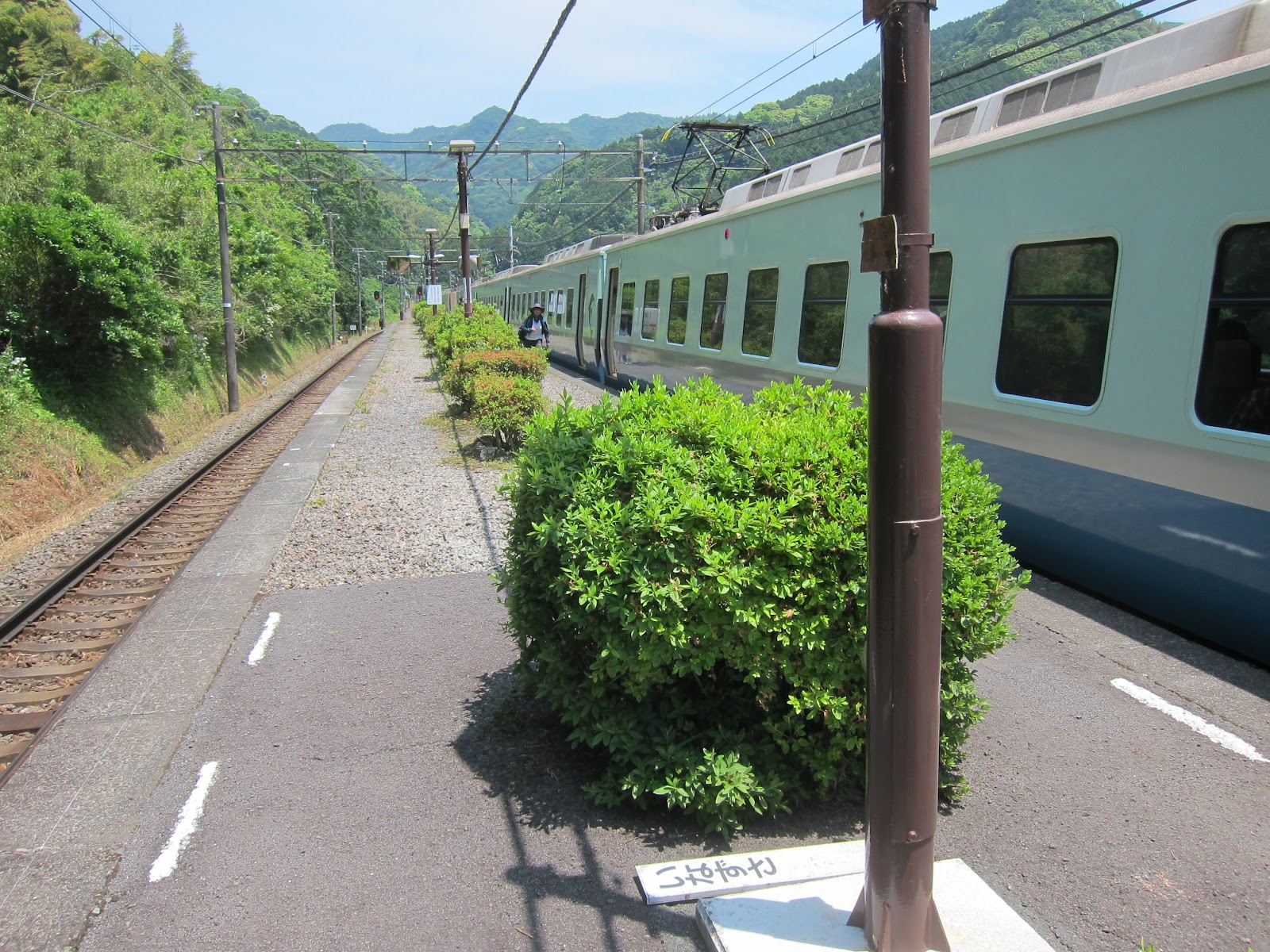
伊豆急線の稲梓駅
生けてる!
プラットフォームの奥の方は砂利。
自動販売機よりは茂みでしょう。
トランジション2.0の映像でプラットフォーム菜園を
ロンドンで実践していた。
僕だったらここに金柑かフェイジョアを植えるな。

What a cool train station.
Part of the platform is gravel, and they have hedges growing.
I would plant kumquat or pineapple guava here.
In Transition 2.0 showed some Britons growing food on platforms,
why not make them productive spaces.
In Tokyo we just have shops and high tech vending machines.
This station is also un(wo)manned.


無人改札を出てすぐに雨水を活用した小池。
素敵!駅沿いのオアシス。
ここから村に降りて、山道を15分くらい登る。

Right outside the wicket is a little rainwater pond oasis.
Quite beautiful.
From here we walk up a mountain trail fro 15 minutes.


ディオンが作った竹のデッキ。
おもてなしとして、夏みかん(多分)の山盛りと
  洞窟水にハーブを入れた美味しいカクテルが用意されていた。

We gather around a bamboo deck that Dion and his brother? made.
They have a bunch of citrus (Summer mikan or Amanatsu) ready,
and "cave" water with tasty herbs.


自生ワイルドサラダ。
スイバ、蕗、イタドリ、芹、蛇苺、など。

Dion explains about how there is food everywhere.
Here we see sorrel, fuki, knotweed, Japanese parsley, wild-strawberry, etc.
All are edible and grow wild.


ディオンが植えたヤコン。
これがまたおいしいんじゃよ。

A small patch of yacon.
mmmmm....yacon.
In warmer areas of Japan you can grow avocados,
white zapote, papaya, mangos, etc.


柳(バスケット用)の苗どころ。
段ボールマルチが柳の挿し木を守っている。
このまま育てて伸びては切って、
バスケットの材料として活用する。

Basket willow nursery with lazy cardboard mulch.
The cardboard mulch keeps weeds from growing around the willow.
Dion explained that they will coppice the willows regularly
and use the young shoots for weaving.

At the Bullocks we buried the ends of the cardboard,
then covered the board with soil and mulch.
It looks much better that way and makes it easier to deal with "runner" weeds.
But there is no right way, it all depends on your goal.


まさに食べ物の森。
枇杷(左)、キクイモ(手前)、柿(右)、
奥には茶の木、甘夏、栗

Food forest
We have loquat (left), jeruselum artichoke (front), persimmon (right).
In the back are tea plant, amanatsu (citrus), and chestnut.


雑草の中に
空豆が混ざっている。
(写真の真ん中)
獣害対策らしい。

Dion explained that they grow their favas in weeds to prevent animals from eating it all.
The favas are in the middle of the picture.


雑草の中に植えられた大豆。
さすがパーマカルチャーオタク。

Soy beans planted amidst weeds.
The milk cartons help indicate where they are.


熱心にメモを取る日本のパーミー達。
小道から逸れると大事な植物を
踏んでしまうかもしれない。

Japanese permies seriously taking notes.
We needed to stay on the paths since it's hard to tell where plants are planted.
A common challenge between plant nerd permies and their "guests".


自然からの学び、
インスピレーション。
それがパーマカルチャー生活。

Nature's patterns.
A source of inspiration for living permaculture.


キーウィーがすでに生えている木を登る。
食べ物の森デザインでは高さを活用する事も重要。
ここもダンボールマルチ。
ブロックスでは見た目を美しくするために、
土と枯れ葉などで被せて自然な感じを演出する。

Kiwi are trained up established trees to make use of vertical space.
The cardboard helps to keep down weeds and demarcate where the kiwi is growing.


薬草ガーデン。
レモンバーム、コンフリー、ボリジ、ドンクワイ
チコリー、山芋など。
コンフリーはカリウムなどを地中から収集すると言われている。
近くに生えているザクロはカリウム好きなので、
そんなギルド関係も工夫されている。

Medicine and herb garden
Lemon balm, comfrey, borage, donquai, chicory, yamaimo, etc.
Dion explains that comfrey is a "dynamic accumulator",
and collects potassium. 
He planted it near pommegranate which is a heavy potassium feeder.


家の近く(ゾーン2)にコーン畑。
獣害にやられやすいコーンを見守りやすい所に配置している。
水や栄養を多く必要とするので、
生活排水がコーン畑に流れるようにしてある。

Corn is planted near the house (zone 2),
so that they can keep a close eye on them as they are a popular target for creatures.
The gray water system also keeps the corn fed and well-watered.


生活排水システム。
超シンプル!
配水管は砂利のピットに流れ込むようになっている。
そうするとすぐに浸透して分散していく。
生活排水に流す物を気をつければ、
こんなシンプルな生活排水システムで十分。
中米ではこのような生活排水システムの
周りにバナナが良く植われている。

Gray water system
Super simple!
Reminds me of Central America where rural folks just had pipes from their sink drain right outside their homes into a banana plantation. Its all you really need to do. Dion explains that if you are careful about what you put in your drain, then simple systems like these suffice. I think he dug out a one meter trench and filled it with gravel so the water would sink quickly and disperse. You do not want standing water that is full of nutrients. It might become a disease/pathogen, smell, bug, creature vector.


栗やクヌギで椎茸も育てている。

Shiitake logs made from kuri and oak.


苗どころ。
パーミーにとっては苗どころは必需!
植物はただでどんどん増やせる。

nursery
An important element of any permie site.
Unlike money, plants just keep increasing.


洞窟からの湧水?
(浸み水が洞窟の天井から落ちて溜っている)
何か魅力的。
ポンプは使わず重力のみで家まで引いている。

Cave water
The water seeps through the cracks in the bedrock 
and drips down from the roof of the cave into the pool below.
The pump is not used and gravity feeds the water to their home.


イノシシが自由に通れるようにデザインされているが、
芋類はフェンスでかこっている。
日当りと土が良い土地が限られているので、
岩の上に枝、葉、雑草を積み上げてそこに芋を植えている。
畑は自然農風。

Garden
Wild bores and monkeys are major challenges for farmers in Japan.
Dion explained that they made it easy for the wild bores to pass through their property.
That is why there is very little fencing.
The theory is that the bores won't linger and will just keep going down the mountain side.


クルミのピクルズとワイルドサラダ。
100%現地で収穫されたもの。
蛇苺、菫、つぼ草、血止め草、コンフリー、
ニラ、クローバー、ハコベ、フェネル、ボリジなど。
酢は自作の柿酢!

100% local wild salad with pickled walnut.
Ingredients include: wild strawberry, pansy, centella, floating pennyroyal,
confrey, nira, clover, fennel, borage, and chickweed.
Vinegar is homemade from persimmon.


ガスのコンロもあるけど、
ガス管を掲げて山道をのぼって以来、
ロケットストーブと火鉢だけの生活に変わったとあさこが言う。

They live in a house that has a propane powered kitchen,
but after carrying a propane canister up the forest path,
they decided it didn't make sense.
So, they cook only with wood.
They use a common homemade rocket stove (back),
and traditional Japanese shichirin (front).


バケツ型コンポストトイレ
尿を分ける工夫もしている。
Humanure Handbookでは分ける必要はないと書いていたが、
分けた方が扱いやすい所もある。
これもまたまたシンプル。

This is a Japanese style toilet that is still fairly common.
But, Dion and Asako transformed it to a bucket humanure system.
They also added a pee catcher to keep the solids and liquids separate.
In the Humanure Handbook, I think Jenkins talked about keeping the two together,
and that is what I did in Costa Rica. 
But, I can also see drawbacks to mixing the two,
and pee should probably be used right away, whereas poop takes a while.


パーミーの本棚
定番の本がいっぱい

Lots of permy books!
There is a lot you can tell from one's bookshelf.


食べ物の森デザイン
分かりやすい!

Nice simple illustrations of food forest designs.


パーマカルチャーデザイン
結局パーマカルチャーは何かと聞かれた時、
【デザイン】がキーワードだと思う。
こうやってデザインする事によってパーマカルチャーの
原則を上手に活用できるのかもしれない。

Permaculture Design
In the end, when asked "what is permaculture", 
I think the key word is design, its largely a design method.
There is so much more to the permaculture movement than design method invokes,
but sometimes its important to be conservative when defining terms.

ディンの言葉:
In Dion's words (more or less):

土地に来てからの最初の一年はただ観察する。
(僕の先生もこれは必需だと説明していた)

First year just observe the land.

【農業】に慣れている人にとって、
ここのどこを見ても食べ物が育っている事を
理解するのが難しいかもしれない。

People who are used to farming will have a hard time seeing that there is food growing all around.

森の中では植物は勝手に生える。
私たちはそれらを大事に扱うだけ。
実のる樹木がもうすでに育っていたので、
そのケア行っている。


In the forest, plants just grow on their own. We just take care of them. There were many food producing plants growing when we got here, so we just cared for them.


こういう生活を成功させるためには、
食生活も変える必要がある。

*因に、彼らはお米などを買っている。
100%自給自足ではないが、
目指している物は多分できるだけそれに近い物だと思う。
お金が殆ど要らない生産者生活。

In order to live like this, you need to change your diet too.

*They are not 100% self-sufficient,
but they are moving in that direction.
A productive life with minimal dependence on money.

ディオンとあさこのホームページ
Dion and Asako's website


http://shikigami.net/


自然農フォトジャーナリストで一緒にヴィッパサナのサーブもした
 Arai Yoshimiさんが撮った写真。
ここをクリック

Above link are pictures from the same trip taken by a Vipassana and natural farming friend, Yoshimi Arai.


<自分の話>
いつしか百姓から都会型活動家/院生に変身してしまった。
こんな素敵な田舎の記事を書きながら聴いている曲は、
ポップダンストップ20のミックス。
Pitbull, Avicii, Britney Spears, Taio Cruzとか。
最低な歌詞だと思いながら体はノリノリ。
ブロックスにいたときも大自然の中、
同じ様な曲を聴きながらストリートダンスしたり、
ブログ書いていた。

Well, so here I am listening to the top 20 hits of pop dance music,moving my body to the beat as I feel slightly disgusted by the lyrics,writing a blog entry about living permaculture. Even at the Bullocks, I used to listen to Missy Elliot, Justin Timberlake, Pitbull, Avicii, Britney Spears, Taio Cruz, etc. and practiced my street dance moves. Who would've guessed.