Vision

To help transition Japan to a peace promoting post-carbon country while enjoying every step of the process.
僕のビジョンは、祖国日本で、平和文化を育みポストカーボン(Post-Carbon) 社会を促進してゆく事です。
化石燃料や原子力に頼らず、他国の資源を取らない、
自給自足な国へのトランジションを実現させてゆきたいです。

Showing posts with label Permaculture. Show all posts

Sunday, June 30, 2019

life at the peace and permaculture dojo by rapper Mio

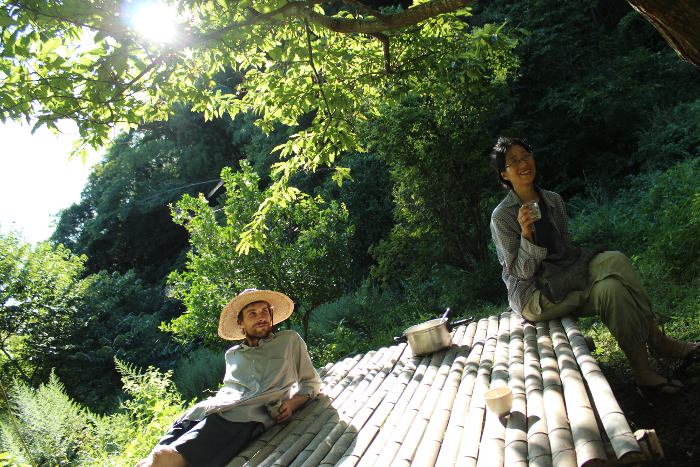
Below is a video of life at the Peace and Permaculture Dojo (the Dojo)


道場 (dojo) means a place (場)of/for the path (道)also known to the West as "dao".  The Dojo is in the early stages of development as a place of practice, and a place of nonviolent/peace activists to gather near Tokyo, but just far enough to be surrounded by rice paddies and the ocean.

In 2018, we experimented with our first residential internship program for Japanese. We had three spots that were filled up with nine people, including a family of five (and two goats). As everything is quite unstructured and organic at the Dojo, it was quite a challenging experiment for all of us, but the learning and growth was priceless.

Things we explored (a sample)
  • simple living e.g. building your own dwelling, cooking with fire and sun, washing by hand (including cloth diapers for two), eating almost completely locally, etc
  • community dynamics and nonviolent communication: how to be authentic, empathetic, and live harmoniously with those who have different perspectives (vegan/non-vegan, toddler/children/20s/30s/40s, single/family, urban/rural, etc)
  • systems thinking and design: community is a system and operates differently than individuals
  • permaculture, natural farming, and ecological regeneration: how to heal the land (and ourselves) and live as part of the ecosystem
  • mindfulness: living in the present moment, engaging with the internal landscape
  • gift economy: living in service, being in alignment with the ecosystem, and having awareness of when things are not a "gift" (like feeling we are pressured to give). Exploring the difference with capitalism through our head, heart, and hands
  •  social change: our relationship to the larger society and our cultural inheritance, roles, and possible contributions in a time of instability
It was an extremely challenging process, especially in the realm of emotions, but I feel such experiences are invaluable and help us grow in ways that modern society rarely offer. AND extremely rewarding (although its not for the rewards that we do this work).

This year (2019) we are doing a five month internship with four residents.

We also have more and more people moving to the area (Isumi, Chiba) involved in running the Dojo and using the Dojo.

Slowly, we will grow our capacity to support more people in their practice.

BELOW are previous articles on the Dojo

Monday, February 6, 2017

【ARTICLE】Natural Farming in Japan: Akame-shizenoh Juku

This is an article I wrote about the natural farming movement in Japan and Akame natural farming school. The article was for a crowdsourced book called Sustainable (R)evolution (click to check out this amazing project!). I also wrote articles on the Bullocks Permaculture Homestead, the City Repair movement in Portland, the ecofarm movement in Thailand, and on chinampas.

For more on natural farming (besides the well-known Fukuoka, Masanobu), you can search Kawaguchi Yoshikazu and akame (the topic of this article), and I highly recommend checking out the book (free online) Miracle Apples.


*This is the closest to our final draft, and the pictures are different from the book


Kawaguchi, Yoshikazu in his garden


The traditional method of drying rice and hand-powered threshing


Yoshikazu in his rice-field cutting weeds with his kama


Akame natural farming school


Cutting the above-soil parts of the weeds in preparation for planting


Planting negi (green onion) in the garden


Broadcasting directly into the weeds


The harvest hidden amongst the weeds


Akame-Shizenoh Juku
by Kai Sawyer and Mai Kobayashi

A farming method that did not involve any pesticides or fertilizer use was first advocated by Japanese philosopher, holistic health practitioner, and spiritual leader Mokichi Okada. In 1950 he called his practice the "shizen noh hou" or the natural farming method. A decade later, plant pathology scientist and philosopher Masanobu Fukuoka also experimented with similar methods, but further extended natural farming methods to include no tilling and no weeding. In 1975, he published The One-Straw Revolution: An Introduction to Natural Farming. Fukuoka's impassioned advocacy of natural farming eventually made him a revolutionary figure in the global movement for sustainable agriculture. Passing away in 2008, Fukuoka did not live to see the revolution in consciousness he had hoped for, but the seeds of natural farming continue to thrive and evolve in Japan.

Today, a central hub for the natural farming movement is Akame-Shizenoh Juku (Akame-juku for short) , nestled near the border of Nara and Mie Prefecture. The site was originally an abandoned series of rice paddy and garden terraces surrounded by man-made forest. Seeing the need for a place where people could come to learn natural farming, Yoshikazu Kawaguchi, the respected practitioner and teacher of natural farming, reclaimed the terraces and started Akame-juku in 1991. The school is completely donation-based, each student paying what they can afford. Kawaguchi understood that most people attempting natural farming were at a major turning point in their lives and often had no money, whether they be conventional farmers trying to switch farming methods, white collar workers looking for a new way to live, or  students. He says that as a teacher, he wants to teach as many eager students as possible, and that he believes the quality of learning is richer when unobstructed by financial concerns.  Learning how to live life, which natural farming essential is, must be accessible to all people.

Yoshikazu also believes that freedom is essential for learning, so there are no obligatory group tasks, however, communal endeavors are a valuable opportunity to learn from one another.  Students are free to spend however much time they can afford in their rice paddies and gardens. Each new student is able to choose a plot among the fields and paddies that become available throughout the year enabling them to direclty put to practice what they learn. Every second weekend of every month (except January), Kawaguchi gathers all the staff members for a monthly gathering. Anybody can come to receive guidance by Kawaguchi and various staff members, cultivating their awareness and experiencing deep realizations about natural farming. The basic principles practiced at Akame-juku are, no tilling, no treating plants or insects as your enemies, and no using pesticides or fertilizers, including compost. Farming must be based on an understanding and respect for nature's dynamic balance that, if approached correctly, will work to nurture life as a whole.  These are guiding principles that are based on a holistic understanding of farming as a part of an ecological balance that we take part in cultivating. An example is Kawaguchi’s instruction for managing vigorous volunteer plants that are overwhelming seedlings: using a sickle as necessary, trim them at the base above their roots, so as not to disturb the soil structure.

The plants here are not treated as competitive weeds, but instead used as mulch and are not totally removed so as to leave food for insects. Food scraps from the harvest taken out of the fields may also be brought back to the fields. This is not fertilizer, but nutrients brought back as supplement simply to maintain the nutrient cycle. Students at Akame-juku experiment and learn how to nurture life through minimal interference in the natural cycle. Through this practice, they also nurture ecological balance, their own consciousness, and inner peace. 

As Akame-juku hosts over 250 students every year, several thousand people have worked on the land since the school opened. Today, dozens of natural farming schools inspired by Akame-juku can be found all over Japan. Kawaguchi says that his greatest joy is to see former students starting their own study-groups and learning centers around Japan.  

The path of natural farming is one of humility, deep observation, and constant flexibility. Kawaguchi says that he accepts that he cannot fully understand nature, but rather can only assist in nature’s cycles as best he can. Natural farmers realize the futility of imposing control over nature and the unsustainability of standard agriculture's attempts to artificially maximize yields and profits. Instead, through minimal interference in the natural cycle, natural farmers in Japan and elsewhere are showing the way to a healthy future for the earth and its inhabitants.


【ARTICLE】Thailand Ecofarm: Maab Euang Agri-Nature Learning Center

This is an article I wrote about Maab Euang eco-farm in Thailand. The article was for a crowdsourced book called Sustainable (R)evolution (click to check out this amazing project!). I also wrote articles on the Bullocks Permaculture Homestead, the City Repair movement in Portland, a brief overview of the natural farming movement in Japan, and on chinampas.

 *This is the closest to our final draft, I lost a picture of their really-floating garden.

A bit more info about them here on Earthlimited.


Maab Euang Agri-nature Foundation in Thailand 
by Kai Sawyer

-->
The Agri-Nature Learning Center at Maab Euang, called an “eco-farm” in Thailand, was started by Dr. Wiwat Salayakamtorm in order to develop practical solutions to environmental and socio-economic crises of modern times. It is located in Maab Euang village in Chonburi province and was founded in 2001 after Dr. Wiwat quit his job as a royal servant in order to put into practice the King’s Sufficiency Economy philosophy. He adopted 16 acres of his brother’s land and transformed the depleted hardpan earth into a productive edible forest garden including several rice paddies and aquaculture farms. He has studied permaculture and Fukuoka’s natural farming and it can be seen throughout the property.

The Sufficiency Economy philosophy stresses the importance of the middle path, and the need to balance forces of globalization with the needs of local resilience. Sufficiency means moderation and self-immunity for sufficient protection from internal and external shocks such as disease, economic instability, and natural disasters. It is an approach to cope with the rapidly changing natural and socio-cultural environments.

The motto of the eco-farm, “Learning by doing”, is put into practice through the nine learning stations, 1. Rice growing 2. Household product making 3. Biodiesel production 4. Charcoal making 5. Soil management 6. Forest gardening 7. Natural healthcare 8. Water management 9. Natural building. Workshops, internships, and visitations are donation-based as the King taught, “more you give the more you receive.”

During the 2011 floods that paralyzed the country the eco-farm served as a survival shelter. According to Dr. Wiwat, the eco-farm supported 500 internally displaced peoples for 2 months and sent rescue boats to help survivors. They had also trained people for major flooding two years prior to the 2011 floods. They continue to host survival camp for the general public. They also have constructed a floating garden made from empty plastic drums, bamboo, and a diverse variety of plants in preparation for future floods.

Today, over 80 Agri-Nature Learning Centers have been established throughout Thailand, and are hubs to teach sufficiency economy based living to farmers, government, businesses, and the general public. All centers also serve as survival shelters in case of crisis.


【ARTICLE】Chinampas: floating gardens

This is an article I wrote about chinampas, a mild fascination of mine. The article was for a crowdsourced book called Sustainable (R)evolution (click to check out this amazing project!). I also wrote articles on the Bullocks Permaculture Homestead, City Repair movement in Portland, the ecofarm movement in Thailand, and a brief overview of the natural farming movement in Japan. The article is just an overview based on my limited understanding so if you are into it, look deeper!


*I think this is the final draft, pictures are different from the book.


Model of what might chinampa agriculture might have looked like


Illustration to explain how chinampas were made


 Chinampa building at the Bullocks Permaculture Homestead (WA, USA)


Banana chinampas in Thailand

I also saw palm tree chinampas in Kerala, India but I lost the photo.


Chinampa
By Kai Sawyer

Chinampa agriculture has been described as ”a self-contained and self-sustaining system that has operated for centuries as one of the most intensive and productive ever devised by man” (Chapin, 1988, p.2). A chinampa is an agricultural field “island” constructed in shallow lake beds traditionally shaped in a long rectangle like a typical garden bed. Chinampas form a network of “floating” gardens on a body of fresh water (e.g. lake), and are often associated with the Aztecs, who developed an intensive agroecological system that can still be found in Xochimilco, Mexico.  Before the Aztecs, the lowland Mayans had been constructing chinampas, some of which were later occupied and further developed by the Aztecs. This unique Meso-American agricultural system exemplifies sustainable food production through its ability to maintain continuous long-term and year-round productivity utilizing local resources.

The term chinampa is thought to have come from Nauhatl words chinamitl and pan, meaning reed basket and upon. The Nauhatl words appropriately describe the key characteristics of chinampas, which were constructed by “piling bed-clay and mud from the lakes, aquatic plants, dry-crop silage, manure and silted muck upon one another in precise layers between paralleled reed fences anchored in the lake bottom” (Woodard, 2011). The construction process, as described by Prutzman (1998), begins with Chinamperos using a long pole to find an appropriate base. The dimensions of the chinampa are marked with reeds stuck into the ground. These reeds are then smothered with mud excavated from around the base, creating canals surrounding the chinampa for canoe access. Next, thick mats of water lily and tule reeds are layered to create a nutrient-rich compost pile. This is followed by another layer of mud mixed with soil from an old chinampa. The sides of these garden beds are secured with posts interwoven with reeds or branches. Finally, willow trees are planted around the edges to provide structural support and create a favorable microclimate. Water flows through the porous structure of these garden beds that are self-irrigated through capillary action.  

Soil fertility is renewed by scooping up material from the bottom of the lake and canals onto the chinampa. Aquatic plants are also cultivated in waterways as fertilizer, and are piled onto the chinampa along with the mud. Planted willows contribute to fertility as foliage falls on the garden beds, creating a nutrient-rich mulch. The leaves that fall into the water feed the aquatic life and the nutrients will return to the lake bottom, only to be scraped back onto the chinampa. The willow trees also produce a microclimate by functioning as a windbreak and creating an air pocket with higher temperatures and humidity, greatly reducing frost damage.

Another key feature of chinampas are seedling germination beds and nurseries established at the edges of the chinampa by forming low terraces. These terraces are perpetually moist and humid, layered with nutrient-rich mud scooped from the bottom of the canal or lake, an ideal environment for seedlings. A thick layer of mud is spread over a bed of waterweeds, then after drying is cut into small rectangular blocks. Small holes are made in each block and a seed or cutting is implanted, covered by human or livestock manure. Reeds and newspaper were used to protect the seedlings from the frost. Once ready for transplanting, cubes are cut and planted into the designated location (Coe, 1964). This is a great example of “relative location” as plants are propagated where they will be transplanted and harvested, with little energy wasted for transport.

Chinampas are an excellent example of various permaculture principles in play: the extensive utilization of onsite biological resources (aquatic plants, willow), complete nutrient cycles, maximization of edges (canals, seedling nursery), relative location (water source and garden bed, seedlings), elements having multiple functions (reeds, willow), efficient energy planning (irrigation through capillary action), etc. Chinampas are ecologically elegant and highly productive, especially when compared to fossil-fuel-intensive modern-day agriculture with heavy chemical inputs (fertilizers, pesticides) transported from faraway factories. There is much that we can learn today about sustainable food production from this ancient Meso-American agroecological system that is believed to have provided sustenance for over a million Aztecs.  

For a detailed discussion, see Spencer Woodard’s article, “Chinampa: Raised-bed hydrological agriculture.”

References (APA format)
Chapin, M. (1988), The seduction of models. Grassroots Development, 12 (1).
Coe, M. D. (1964). The chinampas of Mexico. Scientific American, 211, 90-98.
Prutzman, C. A. (1998). The chinampas of the valley of Mexico: HBO Studio Productions (Doctoral dissertation, University of California, Berkeley).
Woodard, S. (2011). Chinampa: Raised-bed hydrological agriculture. Retrieved January 30, 2013, from
http://anthropogen.com/2011/04/24/chinampa-raised-bed-hydrological-agriculture/ 


Monday, December 15, 2014

Urban permaculture in Japan resource list (on-going project)

I was recently asked about urban permaculture.....again. So, in addition to my permaculture in Japan resource, I decided to start an urban permaculture resource list. This is a start, but slowly I'll get around to organizing it more. An important note is that these resources below are what I would loosely tag as urban permaculture or urban sustainability.

If you walk around in residential neighborhoods away from the station, you'll see some creative gardens and a variety of other sustainability inspired installations. Outside of the heart of Tokyo, there are still urban veggie farms and rice paddies. Especially in the North-West of Tokyo. In fact, the West side of Tokyo is forest and little know fact, there is one official "village" in Tokyo called Hinohara mura. This is all to say that Tokyo is super diverse.

Tokyo DIY garden has some cool pix to start you off.


HARAJUKU 
A shop called Kagure in Harajuku has a nice mini food forest (mulberry, loquat, berries, etc) and a worm bin. Another place Ikiba has some cool installations (mobile tea house and plants). I'm planning to do an installation at Commune 246 early 2015. 


SHITAMACHI AREA
Shitamachi, especially the area North of Skyptree has some old school urban gardens and water tanks.

Shitamachi Museum is a great place to learn about old-school urban permaculture design.


TOKYO
Pasona super high-tech urban garden. Not my style but lots of people seem to be curious about it.
http://tokyogreenspace.com/2010/05/07/pasonas-new-farm-and-landscaped-building/


KOURAKUEN (Tokyo Dome)
Koishigawa Kourakuen is a very urban Japanese Garden with rice paddies. Its not a production site but a really interesting feature.


GINZA
Ginza Bee Project is interesting too.


Some articles of interest

Green Tokyo: 5 cool examples of urban agriculture
http://en.rocketnews24.com/2013/09/01/green-tokyo-5-cool-examples-of-urban-agriculture/


Allotment Gardens Sprout One after Another as Interest Grows in Urban Agriculture
http://www.japanfs.org/en/news/archives/news_id034564.html

Japan’s Urban Agriculture: Cultivating Sustainability and Well-being
http://unu.edu/publications/articles/japan-s-urban-agriculture-what-does-the-future-hold.html


Permaculture in Japan resource list on Living Permaculture
http://livingpermaculture.blogspot.jp/2013/09/permaculture-in-japan-sites-to-see.html


*if there is anything you want to add or comment about, please leave a note!

Also, my urban permaculture book (in Japanese) is coming out in January 2015, so I think things will get more interesting. There is a apartment complex we are planning to transform into an urban permaculture experiment, and a few other smaller experiments around Tokyo that I was asked to do.

Sunday, March 23, 2014

Book: Sustainability [R]evolution 世界のパーマカルチャー本が出版された!

日本語は下だよ〜

Last year, I contributed a few articles to a book project titled Sustainability [R]evolution. It has now been published and is quite a beautiful book showcasing permaculture sites from around the world. Articles I wrote are Bullocks Permaculture Homestead (with Scott), City Repair (with Adelaide), Maa Bueng Eco-Farm, Chinampas, and natural farming.

Below is the message from the editors

-------------------------------------------------------------
It’s been a long and winding, nearly 8 year journey, but the Sustainable [R]evolution book is now in print—all 352 pages with 60 sites profiled!   It looks gorgeous, thanks to the high-quality recycled matte paper the press used to showcase Erika Rand’s incredible layout design, and includes thousands of color photos of inspiring sites all around the globe.  We are also very honored to have had environmentalist Paul Hawken write the book’s compelling foreword, and to have included work by luminaries such as David Holmgren (co-founder of the permaculture concept), Starhawk, and Dr.Vandana Shiva. We hope you'll be inspired and that it can become the outreach piece we’ve dreamed it could be, drawing new permaculture revolutionaries to join the movement.

Sustainable [R]evolution is officially available at bookstores everywhere as of February 25. Getting books straight from our organization at CultureofPermaculture.org is the best for us.  Another good way to get the book is to put in an order at a local independent bookstore, which tend to get extra copies to sell if a customer requests one. Stores can order wholesale from Random House. If you are connected with or have suggestions for a store you think should sell the book, let us know. For international shipping Amazon offers the cheapest option.  And the eBook will be available on March 25.

Also, even if you don't order from them, please consider going to Amazon and rating the book, as well as giving a customer review. 
This helps a lot!

We are so grateful for your support, community... stay tuned for details about our launch party and other events.

¡Viva La Evolución! 

----------------------------------------------------------------------

I'm heading back to the West Coast in June and will probably do another Japanese tour of the Pacific NorthWest permaculture scene. I'm also looking for a nice community to settle in and contribute but for relationship reasons it needs to be warm.

See you soon!


去年、Sustainability [R]evolutionっていう本の
ことをネットでたまたま見つけた。


世界中のパーマカルチャーの実践例を
まとめた一般の人向けの本プロジェクト。
見た目が魅力的で、内容も分かりやすく、
パーマカルチャーの多様性を盛り込んだ作品。
さらに、世界中のパーマカルチャー活動家や
ライターに呼びかけてみんなで作る形の本。

僕も参加して、関西にある赤め塾と川口さんの
自然農の記事から、ブロックス、シティリペア、
タイ王国のエコファームやチナンパ農法の記事を
書くことになった。英語の方がまだ書けるんだよね。

世界中のパーマカルチャー農場からエコビレッジから
都会型のパーマカルチャーがのっていて、
共生社会を実験的に実践している
ガイドブックみたいな感じがする。
日本のパーマカルチャーセンタージャパンや
Fujio Eco-Parkものっているよ。

詳細は:
本をクリックすると内容も見れるよ。
アメリカにいる人はAmazonではなくindependent bookstoresで買うのがおすすめ。

英語版が出たばかりだから和訳はいつになるか分からないけど、
和訳も出してほしいよね!

複数買いたい場合は、僕を通すと多分20%引きになるので
情報をまとめてくれれば取り寄せられると思う。

僕も引き続きアーバンパーマカルチャーの本をみんなとがんばりまーす。

共生革命家
海


本からのサンプル


パーマカルチャーのお花
各分野が花びらになっていて、
中心が倫理と原則となっている。

花びらは:
  • 大地と自然、
  • 土地へのアクセスとコミュニティ統治、
  • ファイナンスと経済、
  • 健康と精神的充足、
  • 教育と文化、
  • 道具とテクノロジー、
  • 建築物


世界のパーマカルチャー拠点マップ(実践場)


マテの栽培をしているアマゾンの先住民族を支えるビジネス


砂漠のパーマカルチャー【アースシップ】

Wednesday, January 16, 2013

1.18.13 Dionとあさこのパーマカルチャー・イベント Shikigami

日本語は下だよん。


Two dedicated permies in Japan, Dion and Asako, will be presenting on their living permaculture lifestyle in Izu. They will talk about natural farming, forest gardening, and deep ecology.

1/18 (Fri) at One Kitchen in Yotsuya
Donation based event

Dion will be presenting in English (w/ translation)

ディオン・ワークマンと北折麻子が、伊豆半島にあるShikigamiでの活動と生活について話します。

写真や話を通して、パーマカルチャー、ディープエコロジー、フォレストガーデニング、ギフト経済についての考え方を紹介し、彼らがShikigamiにてこのようなアイデアを実行しているかについて説明をします。

【日程】 1/18(金)19:30

【場所】One Kitchen 四ッ谷
【料金]】ドネーション
ディオン・ワークマンと北折麻子はニューヨークにてアーバンパーマカルチャーを始めました。建物の立ち並ぶ間の小さな庭で野菜やフルーツ、ハーブを育て、ルーフトップガーデンやコミュニティーガーデンのプロジェクトに参加したり、市の大きな公園で野草摘みをしたり。

その後、世界的に有名なパーマカルチャーの先生、ジェフ・ロートン、ダレン・ドハーティー、デヴィッド・ホルムグレンや、エコロジストのハイカイ・タネに学び、ディオンは2008年、創立者のジョー・ポレイシャー亡き後のニュージーランドのレインボーバレーファームにて、2年間ファームマネージャーをしていました。

あさこもレインボーバレーファームで暫く働いた後、ディオンとともに日本とフィリピンに行き、何ヶ所かで働きながらアジアのパーマカルチャーとフォレストガーデニングがどのようなものであるか、勉強しました。

2011年2月、2人は伊豆半島に移り住み、Shikigamiを設立しました。食べ物、繊維、燃料、建築材料、薬などを、自然の森のシステムを真似しながら育てる方法で、そこにパーマカルチャーや自然農法、ディープエコロジーの考え方を入れ込みながら、フォレストガーデンを作っています。

昨年のshikigamiのお話会の様子はこちら→

[申し込み]はinfo(at)shikigami.net

彼等の【家】に訪問したときの記事(写真付き)

Tuesday, October 16, 2012

Free Permaculture Workshop at University of Tokyo

東京大学のオープンキャンパスイベントで
パーマカルチャー入門のプレゼンを英語でします。


yo yo yo!
I will do a free Introduction to Permaculture presentation during the open campus event at University of Tokyo Kashiwanoha campus (beware this is actually in Chiba). It will be an INTRO so if you are a permy and live far, then it probably won't be worth it. I'm happy to do a more advanced workshop in English if someone wants to help organize it.

I will talk about the origins of permaculture, underlying ethics and design principles, and a few examples from around the world from rural to urban environments. From 14:30 I will be doing a systems thinking games workshop too. There will be many other presentations and workshops all over campus.


1. Introduction to Permaculture
Lecture Room 3 (change of room) 1300~1420

Permaculture is a design methodology for creating sustainable settlements.
Elements of permaculture include edible forest gardening (food forests),
bioremediation (eg. mycoremediation), rain-water harvesting, 
passive solar design, alternative energy, community design, etc.

It is practiced throughout the world, and I hope to share some examples with you.
I will try to include examples from Jordan, Nicaragua, South Africa, and the US.


2. System Thinking Games
Lecture Room 3  1430~1530

This will be an interactive workshop to explore systems thinking through games. 
I am planning to use a game or two from the Systems Thinking Playbook by 
Linda Booth Sweeney and Dennis Meadows (co-author of Limits to Growth). 

This is an opportunity to learn how to think and teach about systems together,
while playing at the same time. 


Date: 10/27 Saturday

Time: 13:00

Place:
Graduate Program in Sustainability Sciences - Global Leadership Initiative
Third Floor, Building of Environmental Studies
5-1-5, Kashiwanoha, Kashiwa-shi
Chiba 277-8563, JAPAN


MAP: http://www.u-tokyo.ac.jp/en/about/documents/Kashiwa_CampusMap_E.pdf

The train-line is Tsukuba Express, and the station is Kashiwanoha Campus.
Its a short bus ride or 25 minute walk (I recommend going through Chiba University and the giant park).


(David Holmgren design)

Ecovillage Saihate (Kumamoto) 三角エコビレッジサイハテ(熊本県)


(日本語で)Rainbow Aso 2012の続き。。。

Continuation from the previous blog, Rainbow Aso 2012.


今回のレインボー阿蘇に招いてくれたのが、
三角エコビレッジサイハテ。
フェスが終わってから紹介してもらった。
モバイルカフェとともに阿蘇から三角へ!

The group that invited me to speak at the festival is called Ecovillage Saihate. I got to go for a short visit after the festival. Transported along the narrow roads of rural Japan with the mobile cafe.


エコビレッジサイハテは山の上にあって
海に浮かぶ島々を眺めている。
柑橘系の果樹園が放置状態で、
みかんは食べ放題。
柿はカラスに食われていた。

DJとVJが立ち上げたエコビレッジの住民は
パーミー(パーマカルチャー実践者)や
タイル職人、台湾からの
グラフィックデザインナーなどが住んでた。

This is a fresh new ecovillage started up by a DJ and a VJ (Video Jocky). There are premies, a tile designer, a graphic designer, musicians, fun loving people living in the village at the moment. The property includes a citrus grove that is currently unmanaged but it was abundant with fruit, and the crows were hitting the non-astringent persimmons. 

色々面白いイベントを企画しているみたいで、
野菜が入場料のギブミーベジタブルって
いうイベントに最初は誘われていた。
皆が持ってきた野菜で
シェフが晩ご飯をつくったらしい。

The do a lot of creative events/parties here. Originally, I was invited to an event called "Give me vegetable", where attendees were asked to bring veggies as the entrance fee, and a chef cooked up the harvest for dinner. It was an event that attempted to bring old-school local farmers together with the groovy transplant artists.

施設はとっても充実していて、
様々なDIYプロジェクトに役立つ
道具がそろっている。
壊れた道具を分解して、
部品の再利用もしている。
そこにいれば何でも作れそうな感じ。

土地を買った時について来た物もあれば、
住民やビジターが持ってきた道具などがある。

The have an impressive collection of facilities and tools, much of which came with the property. Many unfinished projects lying around mainly because everybody was busy preparing for the Rainbow Aso festival which this ecovillage played a central role.


溶接機と未完成の家具
Welding machine and unfinished furniture


陶芸スタジオとジャンベ
Pottery studio and a jimbei
Beat inspired pottery


本格的な木工作業場
Woodworking studio


レコーディングスタジオ
Recording studio


ころがっていた未完成のロケットストーブ
いずれは美しいモザイクで飾られる。
An unfinished rocket stove,
soon to be covered with a beautiful mosaic.


大広間にはロケットストーブベンチがある。
上が畳になっていて和風感が漂う。
Trippy looking rocket stove tatami bench.


大きなスペースにはターンテーブルや
ドラムセット、大きなスピーカーがスタンバイ中。
The main hall is ready for a party anytime.
Two turn tables, drumset, and big speakers.


建物はミッキーのアートで飾られている。
Mikey's art decorates the structures.
She is a graphic designer visiting from Taiwan.


たまり場(カフェ?)の外には
The hangout spot/cafe


アースバッグのコンポストトイレと
アースオーブンが完成間近。
Work in progress earthbag compost toilet and cob oven


糞が畑に流れるように工夫された鶏小屋
The chicken coop designed so that the feces/nutrients washes into the garden

自由でDIYな感じが魅力的だった。
みんなで楽しみながら新しい生き方を
創作しようとしている感じ。

ビジョンは
「衣食住をみなおし、文化的循環型コミュニティーを創る」

It was a really nice place full of DIY culture.
Their vision is to become self-sufficient and develop a sustainable culture.


出発前は愉快な仲間と昼食。
左側がやたら盛り上がってる。

Final meal with the ecovillage residents.
I recommend a visit if you want to check out new-style Japanese alternative living.

おすすめスポットだよ。
東京の活動がなければ長期滞在したかった。

ホームページもcheck it out.
Their homepage:

Thursday, September 13, 2012

Bullocks 2012 part 3

写真でなんとなく分かるかな?
Part 3 of my pictures from Bullocks.


The Friday morning meeting extraveganza!!!
This is an all-purpose meeting, full of business, the weeks visitor info, jokes, stories,
detailed conversation about nut and bolt size, and more.
An interesting lens into the Bullocks' process.

Cuddling, massage, eating, stretching, and yoga also happen during meetings.


I've recently enjoyed eating straight from the source.
The ultimate fresh and local.
Blackberry and brassica flowers are my favorites.
It's also energy efficient and economical.


Visitors cleaning the fridge that smelt like death.
Some creature blood seemed to have been spilt inside.
Communal farm fridges can be scary sometimes.
A good way to discourage use of energy intensive appliances.


Red washington
The tree was littered with beautiful deep red plums


Yuriko catching the plums as I picked them
Always fun to work together


Chai chai plum shot


Drying plums
The plums were dumping fruit and the fruit enthusiasts couldn't eat them fast enough.
That's when drying, canning, wine-making, and other preservation methods become important.
Processing is also good when you have a variety of fruit that is not so exciting fresh.


The fridge food dehydrator.
The heat from the fridge is channeled into a food dehydrating box.
Looks easy to make and you can get consistent heat 24/7.


Keets slowly exploring around the homestead


Gravensteins apples
Great for cooking


Yuriko herding keets with palm frans.
Cute


Shiro plums
Golden sacks of delicately sweet plum nectar
A real summer treat
They drip with juice as you bite in


Dahlia
An explosion of beauty


The money plant
Really neat looking seed pods


The Bullocks crew doing what they do.
Being free, Having fun


The representatives of Japan.
Japanese are so weird!

And now.......harvesting duck we live with.
I pretty much only eat meat when I'm with farmers.
I trust conscious farmers.


Death can be beautiful


Charlie dunking the duck in hot water to open the feather pores


Pulling off the feathers together


Laughing in the face of death
Life, death, and laughter in-between
Thats the way to enjoy life

This duck, Bob, was then transformed into Peking duck.
Thanks bob.